
Indonesia
ASMAN GAYO
ASMAN GAYO
Passion Fruit. Strawberry. Plush.
Couldn't load pickup availability
| Origin: | Aceh, Sumatra, Indonesia |
| Roast: | Filter |
| Producer: | Asman Gayo Mill |
| Altitude: | 1300 - 1500 Meters |
| Varietal: | Ateng, Bor Bor, Catimor, and Timor |
| Process: | Natural |
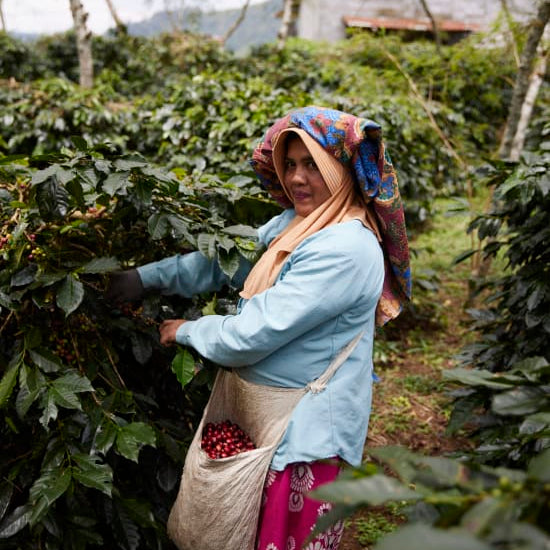
Founded by Cup of Excellence winner Asman Arianto, the Asman Gayo Mill receives cherries from smallholders in the Sumatran region of Aceh. This distinct coffee is perfect for lovers of vibrant natural processing - the creamy tropical notes remind us of a piña colada!
The Cup
Expect natural processing at its best, with a profile that is vibrant and tropical. Notes of passion fruit, strawberry, pineapple, and cola come first, with boozy acidity. Base notes of rich chocolate and cola complete the profile.
The Farm
The Asman Gayo mill serves several small coffee producers within the Pantan Musara villages. Several years ago, these producers were dislocated from their homes and land because of a natural disaster, and they have rebuilt their lives and farms with a new focus on coffee. Unlike the vast majority of other Sumatran coffee receiving and processing centers, this mill is producing Washed coffees, as well as Naturals. Although this offering is not traceable to specific varieties, it is likely comprised of the most common varieties grown in Sumatra, which are Ateng, Bor Bor, Catimor, and Timor hybrids.
Aceh, in northern Sumatra, is an incredible region for coffee production. The average farm is one hectare, 80% of producers within northern Sumatra are women, and 95% of producers are smallholders. The region is diverse, geographically speaking. It is surrounded by beaches with a swampy inland, and the Barisan Mountains make up the inner two-thirds of the area. Coffee is grown on this volcanic mountain amongst the rainforest. One of the notable features of this area is Lake Taboa, the largest volcanic lake in the world.
The Process
Historically, Indonesian coffee producers have implemented the wet hull method but recent years we have witnessed a shift towards modern specialty techniques which deliver exciting new profiles. This lot was naturally processed, with whole cherries placed on covered beds in greenhouses.
